The Digital Afterlife: What It Really Means When VFX Artists Are Asked to Bring Back the Dead
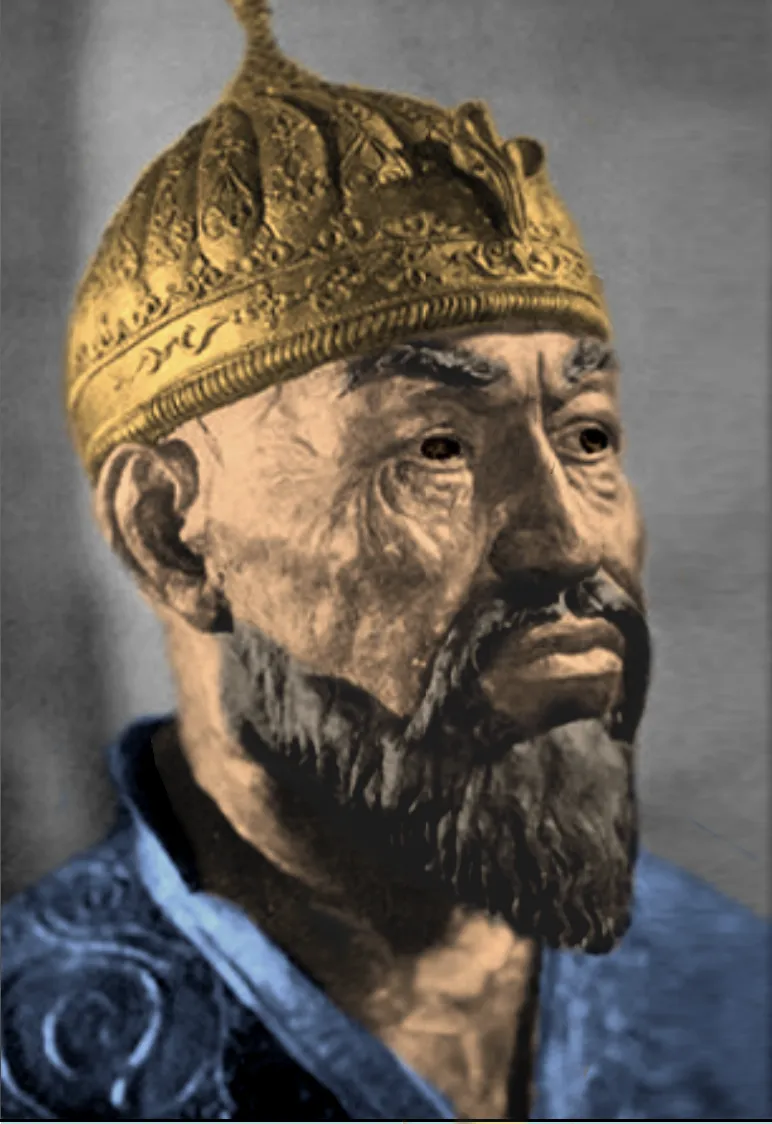
Photo: Tatyana Fominykh V.I. Vernadsky Crimean Federal University Provided under Creative Commons 4.0 license (mention "This work is licensed under a Creative Commons Attribution 4.0 License." at the end of the article [2]), CC BY-SA 4.0, via Wikimedia C
Every major VFX project begins with a brief. A director's vision, a producer's mandate, a sequence of shots requiring execution. For most projects, the brief describes challenges that are technical in nature: how to build a convincing environment, how to simulate a physical phenomenon, how to integrate a digital element into a live-action plate. But a particular category of project now arriving at VFX studios across the United States carries a different kind of challenge — one that is simultaneously technical, artistic, and profoundly philosophical.
These are the projects that ask artists to rebuild a human face from archive footage, reference photographs, and computational inference. They are the projects that place the likeness of a person who is no longer alive into a film or television series that they never agreed to appear in. They are, in the industry's own vernacular, digital resurrections — and they are becoming an increasingly routine part of the American entertainment landscape.
The Technical Achievement
To understand what these projects demand, it is worth appreciating the degree of difficulty involved. Recreating a human face convincingly enough to withstand scrutiny from a contemporary theatrical or streaming audience is among the most technically demanding tasks in visual effects.
The human visual system is exquisitely sensitive to facial irregularities. Audiences who might overlook imperfections in a digital environment or a simulated creature will immediately register something unsettling in a digital human face that deviates from biological expectation by even a fraction of a percentage point. This phenomenon — widely discussed under the umbrella of the uncanny valley — has been the adversary of photorealistic digital human work for decades.
Recent projects have pushed the boundaries of what is achievable. Advances in machine learning-based facial reconstruction, high-resolution photogrammetry of surviving reference materials, and sophisticated compositing techniques have enabled results that, in controlled viewing conditions, can approach perceptual transparency. The gap between a digital likeness and a genuine performance has narrowed to a degree that would have been considered science fiction within living professional memory.
For the artists executing this work, the achievement is genuine and hard-won. Months of reference gathering, model refinement, and iterative testing separate a convincing result from an uncanny failure. The craft involved is, by any objective measure, extraordinary.
What the Artists Are Not Always Told
The technical complexity, however, does not exist in a vacuum. VFX artists working on digital resurrection projects often describe a peculiar professional experience — one in which the scope of what they are being asked to produce exists at a remove from the broader questions surrounding the project's legitimacy.
Artists receive approved reference packages, technical specifications, and shot lists. They are told that rights have been cleared, that estate representatives have been consulted, that legal frameworks are in place. In many cases, this is accurate. But the nature of those agreements — who negotiated them, what compensation was provided, what creative controls were retained — is rarely shared with the artists doing the work.
This creates a situation in which the individuals most intimately engaged with the ethical substance of the project — those who are literally rebuilding a person's face, frame by frame — are among the least informed about the consent architecture surrounding it. The moral weight is distributed unevenly, resting most heavily on those with the least institutional power to interrogate it.
The Estate Equation
Under current American law, the right of publicity — which governs the commercial use of a person's name, image, and likeness — extends beyond death in most states, though the duration and scope of that protection varies considerably by jurisdiction. California, which governs much of the entertainment industry's legal landscape, provides post-mortem right of publicity protection for seventy years.
This means that for many deceased performers, an estate — typically composed of family members, appointed trustees, or corporate entities — holds the legal authority to license the performer's likeness for commercial use. Whether that authority constitutes genuine consent in any philosophically meaningful sense is a question that estate law does not resolve and that studios have little financial incentive to pursue.
Estate representatives and legal scholars have noted that the existing framework was designed for an era in which posthumous likeness use was limited to photographs, merchandise, and archival footage. The capacity to generate new performances — to place a deceased actor in scenes they never filmed, speaking dialogue they never recorded — was not the context in which these legal protections were drafted. The law, as it stands, is governing a technological reality it was not built to anticipate.
Perspectives From the Acting Community
Within American acting communities, the response to digital resurrection has ranged from cautious acceptance to vigorous opposition. Some performers have expressed support for the practice when executed with meaningful estate involvement and clear creative purpose — arguing that preserving a performer's presence in a long-running franchise or completing a project interrupted by illness honors rather than exploits their legacy.
Others have been considerably less accommodating. Concerns center on the fundamental question of performance as a human act — one grounded in the physical, psychological, and biographical particularity of a living person. Generating a new performance from a digital model, critics argue, is not an act of preservation. It is an act of fabrication that uses the surface of a person's identity to create something that person never chose to create.
For working actors, the issue carries an additional dimension. Digital resurrection technology does not remain confined to deceased performers indefinitely. The same tools, techniques, and infrastructure being developed for posthumous recreations are directly applicable to the simulation of living actors — a prospect that has driven significant anxiety within SAG-AFTRA and motivated specific contractual provisions in recent labor negotiations.
The Philosophical Fault Line
At the deepest level, the debate over digital resurrection exposes a fault line in how the entertainment industry understands performance itself. If a performance is fundamentally a product of craft — of technical skill, physical execution, and learned technique — then a sufficiently advanced digital recreation might be argued to constitute a legitimate continuation of that craft. The tools change; the output endures.
If, however, a performance is understood as an expression of personhood — as something that derives its meaning and value from the specific consciousness and life experience of the individual performing it — then no digital facsimile, however technically perfect, can constitute a genuine continuation. It is, at best, an homage. At worst, it is a forgery.
VFX artists, whose professional lives are spent at precisely this intersection of technical craft and human expression, are perhaps better positioned than most to appreciate the weight of that distinction. Many describe the digital resurrection projects they have worked on with a mixture of professional pride and personal ambivalence — acknowledging the achievement while remaining uncertain about the territory into which that achievement leads.
Where the Industry Goes From Here
The trajectory is not toward fewer of these projects. Advances in generative AI and real-time rendering are making digital likeness work faster and less expensive, lowering the threshold at which studios will consider it a viable option. Without regulatory intervention, industry-wide ethical standards, or contractual frameworks that give living performers meaningful control over their posthumous digital futures, the practice will expand.
The artists building these images, frame by careful frame, will continue to do extraordinary work. The question of whether that work should be done — and under what conditions — remains, for now, unanswered.