Manufactured Skies: The Environmental Effects Artists Who Build Storms Frame by Frame
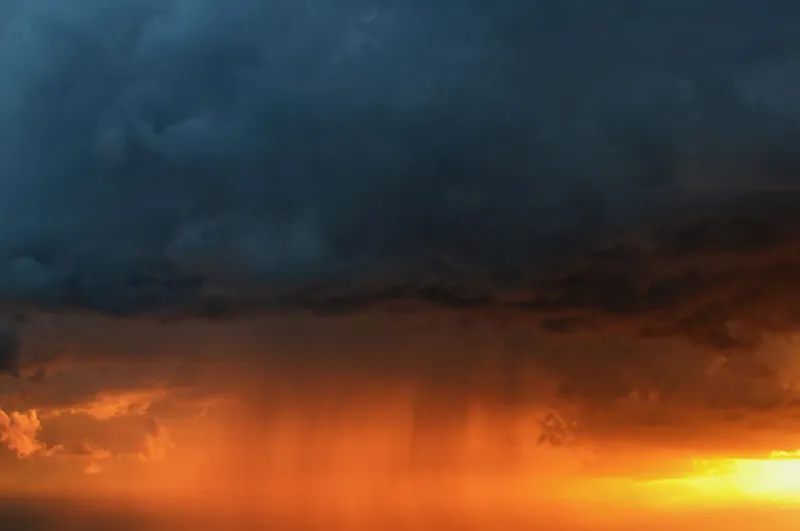
Production schedules do not negotiate with meteorology. A director may need a blizzard on a Tuesday in Burbank, a category-five hurricane on a Wednesday in Atlanta, or a slow, mournful fog rolling across a prairie that has not seen rain in three months. The atmosphere has no interest in anyone's shooting schedule. Environmental effects artists, however, do — and over the past two decades, they have quietly developed a set of tools and disciplines that allow entire weather systems to be summoned, controlled, and composited into live-action footage with a precision that would have seemed genuinely impossible to earlier generations of filmmakers.
The work is rarely celebrated in the same breath as creature animation or digital environments, yet it may be the category of visual effects most directly responsible for anchoring a viewer's emotional belief in a scene. Weather is not merely backdrop. It carries mood, narrative weight, and physical consequence. When it feels wrong, even a casual audience member senses the artificiality, even if they cannot name it.
The Physics Beneath the Spectacle
At the technical foundation of weather simulation lies a discipline borrowed from computational fluid dynamics — the same branch of physics used by aerospace engineers and climate scientists to model how gases and liquids move through space. VFX studios working on large-scale environmental effects build solvers that interpret weather as a fluid system, tracking the behavior of air masses, pressure gradients, moisture density, and turbulence at a level of granularity that scales from individual droplets to kilometer-wide atmospheric formations.
Particle engines handle the visible components of that system — rain, snow, hail, ash, embers — while volumetric tools render the larger gaseous structures: storm clouds, fog banks, dust walls, and the churning interior of a tornado funnel. The challenge is not generating these elements in isolation. Any simulation artist can fill a frame with falling particles. The genuine craft lies in making all of those elements behave in coherent relationship to one another, to the environment they occupy, and to the lighting conditions captured on the day of the live-action shoot.
That last variable — matching synthetic weather to real-world light — is where many effects sequences either succeed or quietly collapse.
Light as the Ultimate Arbiter
When a production shoots exterior scenes on a clear day with the intention of adding a storm in post-production, the lighting environment on set and the lighting environment implied by the digital weather are fundamentally at odds. Actors filmed under high, direct sunlight carry hard shadows and bright specular highlights that no overcast storm system would produce. The work of integrating digital weather into that footage begins not with the simulation itself but with the careful reconstruction of the lighting conditions the storm would have created.
This process involves close collaboration between the effects team, the compositing department, and frequently the original director of photography. Reference photography of actual storm conditions — matched as closely as possible to the geography and season of the production — provides a baseline for how ambient light behaves under cloud cover, how color temperature shifts as a storm approaches, and how reflective surfaces on the ground respond to wet conditions versus dry ones.
Some studios maintain extensive libraries of real-weather reference footage captured specifically for this purpose. Others commission photographic surveys of locations before shooting begins, documenting how light moves across surfaces at different times of day and under different cloud conditions. The goal is to give compositors the data they need to retroactively transform a sunny afternoon into a convincing atmospheric event.
Scale, Variation, and the Problem of Repetition
One of the more counterintuitive challenges in environmental effects work is the problem of visual repetition. A particle system generating thousands of raindrops per second will, without careful design, produce rainfall that looks mechanical — drops falling at identical speeds, identical angles, identical sizes. The human eye, accustomed to the beautiful irregularity of actual weather, detects that uniformity almost immediately.
Experienced effects artists address this through layering: multiple simulation passes at different scales and densities, each carrying its own variation parameters, are composited together to produce the stochastic complexity of real precipitation. A heavy rainstorm might involve a primary particle pass for the bulk of the rainfall, a secondary pass for the fine mist that forms when drops strike surfaces, a tertiary pass for the rivulets and pooling behavior on ground geometry, and a separate volumetric pass for the atmospheric haze that reduces visibility at distance.
Tornado sequences introduce an additional layer of complexity because the visible funnel is only one component of the effect. The debris field surrounding the funnel — soil, vegetation, structural fragments, vehicles — must be simulated with rigid-body and soft-body dynamics that interact convincingly with the fluid simulation driving the funnel itself. The integration of those two systems, and the subsequent compositing of both against live-action footage, represents some of the most technically demanding work in contemporary effects production.
The Quiet Demands of Intimate Weather
Not all environmental effects work operates at the scale of disaster cinema. Some of the most technically exacting weather simulation in American film and television serves stories of quiet human scale — the first snow of winter settling over a neighborhood street, the steam rising from a cup of coffee on a cold morning, the particular quality of diffuse gray light that precedes a thunderstorm in the American Midwest.
These subtle atmospheric moments demand a different kind of precision. There is no spectacle to distract from imperfection. A digital snowfall in an intimate drama will be scrutinized by audiences in a way that a tornado in a blockbuster never will be, because the emotional register of the scene invites close attention. Effects artists working at this scale often describe the work as being closer to cinematography than to simulation — the decisions are aesthetic as much as technical, and the margin for visible artificiality is essentially zero.
An Underappreciated Frontier
The artists who specialize in environmental effects occupy an unusual position within the broader visual effects industry. Their work is, by design, intended to be invisible — to feel like conditions that simply existed on the day, rather than systems that were engineered over weeks of simulation time. When that invisibility succeeds, the work receives no credit. When it fails, it becomes the subject of pointed online criticism.
What is rarely discussed is the breadth of knowledge these artists bring to their craft: fluid physics, atmospheric science, optical phenomena, photographic analysis, and a deeply intuitive understanding of how human perception registers the natural world. The storm you accept without question in the third act of a film you love did not arrive by accident. Someone built it, particle by particle, frame by frame, in a room with no windows — and made the sky outside feel real.