Crossing the Threshold: The Science and Craft Behind Digital Actors We Finally Believe
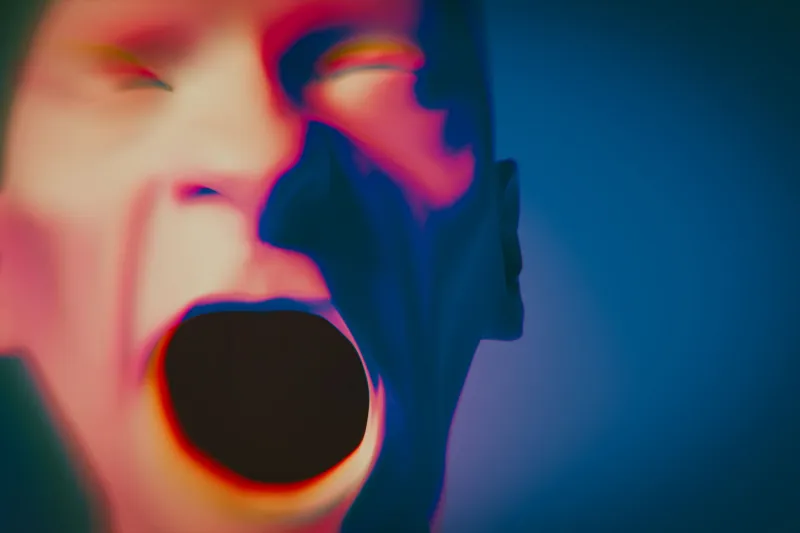
For more than thirty years, the uncanny valley haunted visual effects artists like a ghost they could neither capture nor exorcise. The concept — first articulated by Japanese roboticist Masahiro Mori in 1970 — describes the unsettling psychological response humans experience when a synthetic figure appears almost, but not quite, human. The closer the likeness, paradoxically, the more disturbing the result. Audiences who sat through early experiments in digital human performance often described a creeping, inexplicable discomfort without being able to name its source. The brain, it turned out, is extraordinarily sensitive to imperfection in human faces — far more so than it is to any other subject on screen.
That era may now be closing.
The Neuroscience Underneath the Discomfort
To understand why digital actors are finally convincing audiences, it helps to understand why they failed for so long. Neuroscientists studying facial perception have established that the human brain dedicates an extraordinary amount of processing power to reading faces. Regions including the fusiform face area activate within milliseconds of exposure to a human likeness, scanning for signs of authenticity across thousands of micro-variables simultaneously — the subtle asymmetry of a genuine smile, the involuntary dilation of pupils in response to emotion, the way skin compresses and bunches differently around the eyes than around the mouth.
Early digital humans failed not because they looked nothing like people, but because they looked almost exactly like people while getting those micro-variables wrong. The brain registered the contradiction as threat — something that mimics human appearance without carrying the biological signals of a living person. The result was revulsion.
What changed is not simply processing power, though that matters. The fundamental shift has been in how artists understand and model the biological systems that produce facial expression in the first place.
Skin That Breathes: The Rendering Revolution
One of the most consequential technical advances in recent years has been the maturation of subsurface scattering algorithms — the computational process that simulates how light penetrates the outer layers of human skin before bouncing back out. Real skin is not a surface. It is a translucent material with multiple layers of varying density, each interacting with light differently depending on the wavelength, the angle of incidence, and the thickness of tissue at any given point.
For much of digital cinema's history, skin rendering treated the face as a surface problem. Artists working at the highest levels of the craft have described the shift in recent years as moving from painting a wall to understanding what a wall is made of. Modern rendering pipelines now model blood flow beneath the skin, the way capillaries subtly influence color temperature across different facial zones, and the micro-geometry of pores and fine hairs that catch and scatter light in ways that register subconsciously even when they are invisible to the naked eye.
The result is skin that appears to exist in the same physical world as the camera capturing it — not a texture applied to a surface, but a material with genuine depth.
Capturing What the Camera Cannot Script
Rendering alone, however, cannot solve the problem of performance. A beautifully rendered face attached to inauthentic motion remains unconvincing, and this is where facial capture technology has made its most dramatic strides.
Modern facial performance capture systems now track in excess of five hundred distinct points across an actor's face at frame rates that exceed standard film acquisition. The data generated from a single scene can run to tens of millions of tracking samples, each representing a real muscular event that occurred during a genuine human performance. The artist's task has shifted from animating a face to curating and refining a biological recording.
Character animation specialists working on recent productions have described the challenge not as creating expression but as preserving it — protecting the involuntary, unscripted moments that a performer generates naturally and that traditional keyframe animation has historically been unable to replicate. The twitch of an eyelid during a pause. The almost imperceptible tension that enters the jaw before a difficult line. These are the signals the brain reads as proof of life, and they cannot be consciously manufactured.
The Films That Finally Crossed the Line
Several recent productions have been cited within the industry as genuine milestones in digital human believability. While individual audience members in test screenings have occasionally been unable to identify which performers in a given scene were digital recreations, the more meaningful measure has been the absence of the uncanny response — viewers not noticing something was wrong, rather than viewers actively believing something was real.
That distinction matters to artists working in this space. The goal, as practitioners have articulated it, is not to create a perfect illusion that withstands scrutiny but to create a presence that does not demand scrutiny in the first place. A face that draws no attention to itself as a technical achievement is a face that has succeeded.
Where Craft Meets Consciousness
What the most accomplished practitioners in this discipline share is a commitment to studying human behavior rather than human appearance. The artists who have made the most significant contributions to digital human believability in recent years tend to describe their research in terms of anatomy, psychology, and acting theory rather than software specifications.
The understanding that a genuine emotion produces a specific sequence of muscular events — and that the brain reads those events in a specific order and at a specific tempo — has transformed how character animators approach their work. A smile that begins at the eyes before reaching the mouth reads as authentic. A smile that develops uniformly across the face reads as performed. The difference is neurologically legible even when it is cognitively invisible.
For VFX studios operating at the frontier of this discipline, the uncanny valley is no longer the dominant metaphor. The question is no longer whether digital actors can fool the brain. The question is whether the craft can serve the story — whether a digital performance can carry dramatic weight, convey genuine interiority, and participate in the kind of human exchange that cinema, at its most powerful, has always been about.
The threshold has been crossed. The conversation, now, is about what comes next.