Ghosts in the Geometry: The VFX Artists Who Rebuild Lost Places From the Last Photographs Anyone Ever Took
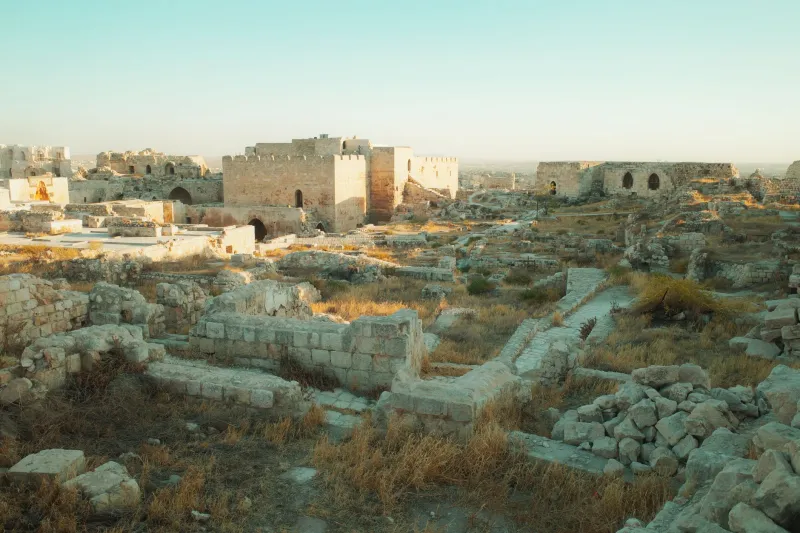
There is a particular kind of silence that settles over a VFX artist when they realize the photograph they are studying is the last known image of a place that no longer exists. Not a building temporarily under renovation, not a street temporarily closed — but a place permanently erased. A neighborhood swallowed by a reservoir. A stadium imploded on a Sunday morning while the city watched. A European quarter reduced to rubble before anyone thought to document it properly.
This is the territory that digital reconstruction artists inhabit, and it carries a weight that conventional visual effects work rarely demands. These are not artists building imaginary worlds from whole cloth. They are, in a very real sense, the final custodians of places that have no other advocates left.
The Archive as Raw Material
Before a single polygon is placed, before a single texture map is painted, reconstruction work begins in libraries, municipal archives, historical societies, and — increasingly — the digitized collections of private families who happened to own a camera at the right moment in history.
The research phase of a serious digital reconstruction project can consume weeks or months before any software is opened. Artists describe developing relationships with archivists, historians, and in some cases, elderly survivors who can describe sensory details that no photograph could ever capture: the specific color a particular brick facade turned in afternoon light, the way a certain arcade smelled after rain, the exact height at which a marquee sign sat relative to the second-floor windows beside it.
For reconstructions of American subjects — the original Penn Station in New York, the old Comiskey Park in Chicago, the prewar Bunker Hill neighborhood of Los Angeles — the challenge is assembling a coherent three-dimensional understanding from a scattered two-dimensional record. Postcards, newspaper photographs, construction blueprints, home movies, and early aerial surveys must all be cross-referenced and reconciled. Contradictions between sources are common, and resolving them requires a historian's patience combined with a spatial reasoning that is distinctly architectural.
Photogrammetry and the Limits of Evidence
When sufficient visual documentation exists, photogrammetry has become the reconstruction artist's most powerful ally. The technique — which derives three-dimensional geometry from the relationships between two-dimensional images — allows artists to extract measurable spatial data from historical photographs, provided those photographs were taken from known or estimable positions.
The practical reality, however, is that historical photography was almost never taken with photogrammetric reconstruction in mind. Angles are incomplete. Interiors are underrepresented. Structural details that would be invaluable — the precise depth of a cornice, the exact curvature of an archway — were simply not considered worth documenting by photographers whose concerns were entirely different.
This is where the craft becomes genuinely interpretive. Artists must make informed decisions about what cannot be verified, filling spatial gaps with period-appropriate architectural logic, regional building conventions, and material knowledge. The result is not a perfect forensic record but something closer to a rigorous, defensible approximation — an argument about what a place looked like, built from the best available evidence.
The Emotional Dimension Nobody Discusses
Producers commissioning digital reconstruction work tend to frame the deliverable in technical terms: a photorealistic environment, a specific number of frames, a particular level of detail. What the contract rarely acknowledges is the emotional labor embedded in the process.
Artists who specialize in this work describe a phenomenon that has no formal name in the industry: a growing sense of personal connection to the places they reconstruct, and a corresponding heaviness when the project concludes and the models are archived. Months of intimate engagement with a demolished ballpark or a lost neighborhood creates something that resembles grief when the work ends — not grief for a personal loss, but something more diffuse and harder to articulate.
Several artists have described receiving correspondence from audience members after films featuring their reconstructions were released — letters from people who grew up near the original site, who attended games in the demolished stadium, who had family members who lived in the vanished neighborhood. These responses, which the artists almost never anticipated, underscore the degree to which this work functions as a public service as much as a commercial one.
When the Record Runs Out
The most demanding reconstruction projects are those where the documentary record is genuinely sparse — where the artist must work not just at the edges of available evidence but beyond it entirely.
Pre-war European city centers present this challenge acutely. Large sections of Warsaw, Dresden, Rotterdam, and other cities were so thoroughly destroyed in the 1940s that photographic documentation is fragmentary at best. American productions set in these environments must navigate not just technical uncertainty but a profound ethical responsibility: the obligation to represent places of immense historical and human significance with appropriate care, even when certainty is impossible.
Artists working in this space describe developing a discipline of visible humility — making creative choices that acknowledge their own limitations rather than overclaiming fidelity. A reconstruction that presents itself as authoritative when it is actually speculative does a disservice to the historical record. The better work, these artists argue, is honest about what it knows and what it has had to imagine.
The Render Farm as Archive
There is an irony embedded in digital reconstruction work that its practitioners are acutely aware of: the reconstructed environments they create are themselves vulnerable to obsolescence and loss. Software changes. File formats become unreadable. Studio storage systems are decommissioned. The digital models that represent years of research and craft can become inaccessible within a decade of their creation.
Some artists have begun advocating for more systematic preservation of reconstruction assets — not just as proprietary studio property but as cultural artifacts with independent historical value. A rigorously researched digital model of a demolished landmark represents a form of scholarship that deserves the same archival consideration as a physical restoration drawing or a historical monograph.
The conversation about how to preserve these digital reconstructions is still in its early stages, and the institutional infrastructure to support it barely exists. But the artists making the case are persistent, and their argument is compelling: if we have rebuilt these places once, at enormous cost in research and craft, we owe it to the record to ensure they do not have to be rebuilt again from scratch.
The Responsibility of the Last Image
What distinguishes digital reconstruction from other forms of visual effects work is ultimately not technical — it is moral. When an artist builds a fictional spaceship or an imaginary monster, the only standard of judgment is whether the result is convincing and serves the story. When an artist rebuilds a place that thousands of real people once lived in, worked in, or loved, the standard shifts entirely.
The best practitioners in this field describe their work not as a creative exercise but as a form of testimony — a commitment to ensuring that places which no longer exist are not simply forgotten but are returned, however imperfectly, to the visual record. Their render farms are, in this sense, something closer to memory institutions than production pipelines.
And when the final frame is delivered and the lights come up in a theater, and an audience member whispers to the person beside them that they cannot believe that place is gone — that is when the work has done what it was always meant to do.