Flesh, Pixels, and Fear: A Definitive Ranking of American Cinema's Most Iconic Creature Designs and the Artists Who Brought Them to Life
Flesh, Pixels, and Fear: A Definitive Ranking of American Cinema's Most Iconic Creature Designs and the Artists Who Brought Them to Life
A great creature design is a form of argument. It argues that something impossible is real, that something imagined has weight and texture and biological logic. When it succeeds, the audience does not merely see a monster — they believe in it, are moved by it, and in the best cases, are permanently altered by the encounter. American cinema has produced a remarkable number of these arguments over the past century, and the artists responsible for them deserve a reckoning commensurate with their achievement.
What follows is not merely a celebration of spectacle. It is an examination of craft — of the decisions made in workshops, rendering suites, and on set that determined whether a creature would endure in cultural memory or fade with the closing credits. These rankings weigh three distinct factors: cultural impact (how deeply the design penetrated the American imagination), technical innovation (what new ground the creation broke in the VFX or practical effects craft), and emotional resonance (whether the creature provoked a genuine, lasting response beyond simple shock).
1. The Thing (1982) — Rob Bottin and the Limits of the Possible
John Carpenter's The Thing remains the gold standard against which all practical creature effects are measured. Rob Bottin, who was only twenty-two years old when he began work on the film, spent the better part of a year constructing a creature that could not be defined — one that existed in a perpetual state of horrifying transformation. The chest cavity that opens into a set of teeth. The head that detaches and grows spider legs. The defibrillator scene that remains, more than four decades later, among the most viscerally disturbing sequences in American horror.
 Photo: Rob Bottin, via www.usmagazine.com
Bottin's work was so physically and psychologically demanding that he was hospitalized for exhaustion before the film's completion, with Stan Winston stepping in to assist on the dog kennel sequence. The cultural impact of The Thing's creature design is difficult to overstate — it fundamentally redefined what practical effects could achieve and established a visual language of biological horror that continues to influence filmmakers today. No digital tool has yet produced anything more convincingly wrong.
2. Gollum — Weta Digital and the Birth of Digital Performance (2002–2003)
If The Thing represents the apex of practical effects, then Gollum — as realized by Weta Digital across Peter Jackson's Lord of the Rings trilogy — marks the moment digital characters crossed into genuine emotional territory. Andy Serkis's performance capture work provided the behavioral foundation, but it was the work of Weta's creature team, led by figures including Richard Taylor and the studio's animators and technical directors, that translated that performance into a digital being of extraordinary pathos.
 Photo: Andy Serkis, via www.fritz-koehne-schule.de
Gollum was not merely a technical achievement, though it was that in abundance. He was a character — one capable of conveying grief, cunning, love, and self-loathing within a single scene. The split-personality sequence in The Two Towers, in which Gollum argues with Sméagol in the dark, remains one of the most emotionally complex moments in the entire trilogy, and it features a character who does not physically exist. The Academy Award for Best Visual Effects that year was not simply recognition of rendering quality. It was an acknowledgment that digital characters had arrived as legitimate vessels for human experience.
3. The Xenomorph — Carlo Rambaldi, H.R. Giger, and the Design That Changed Science Fiction (1979)
The Alien from Ridley Scott's Alien is, in design terms, one of the most consequential creations in American cinema history — though its origins are notably international. H.R. Giger's concept art established the visual DNA, and Carlo Rambaldi's mechanical and practical construction brought it to the screen with a physical presence that no digital rendering has yet surpassed. The creature's elongated skull, its absence of visible eyes, its double jaw — each element was a deliberate subversion of conventional monster design.
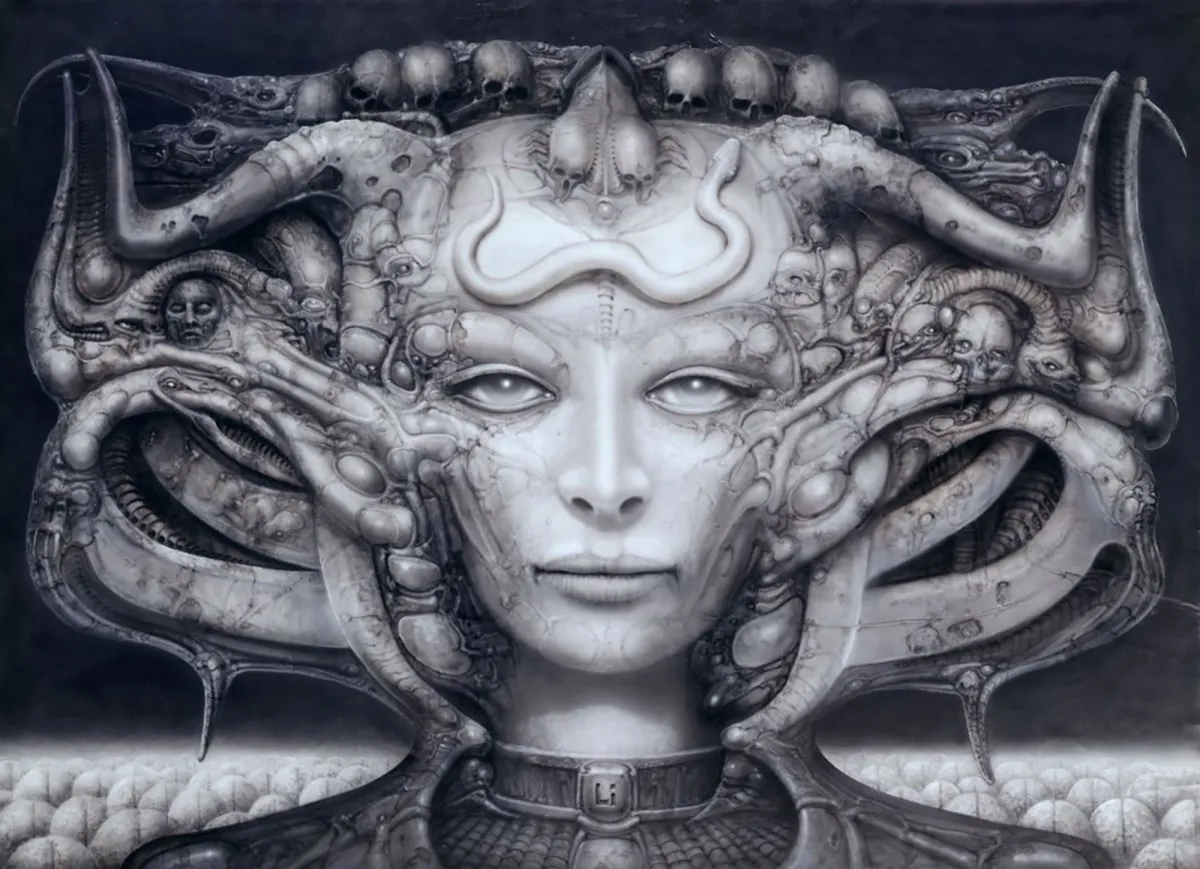 Photo: H.R. Giger, via media.cnn.com
The xenomorph's cultural penetration is virtually unparalleled. It has appeared in sequels, crossovers, merchandise, and parody for nearly five decades, and its essential design has remained largely intact through all of them. That durability is a testament to the original work's fundamental rightness — the sense that this creature was discovered rather than invented.
4. King Kong — WETA Digital and the Return of a Legend (2005)
Peter Jackson's 2005 reimagining of King Kong gave Weta Digital the opportunity to do something genuinely difficult: render a photorealistic giant gorilla capable of carrying an entire film's emotional weight. Andy Serkis returned to performance capture duties, and the result was a Kong of remarkable specificity — a creature with a discernible inner life, one whose relationship with Ann Darrow felt earned rather than imposed.
The technical challenges were formidable. Fur simulation, muscle dynamics, and the integration of a forty-foot digital creature into practical New York environments all pushed the boundaries of what was computationally feasible in 2005. The work holds up with surprising grace, largely because the team prioritized behavioral authenticity over spectacle — Kong moves like a gorilla, carries himself like a gorilla, and communicates emotion through gesture and expression rather than through dialogue.
5. The T-800 Endoskeleton and T-1000 — Stan Winston Studio and ILM (1984 & 1991)
James Cameron's Terminator franchise produced two creature achievements that belong in any serious accounting of the form. Stan Winston Studio's practical T-800 endoskeleton in the original film established a template for mechanical creature design that remains influential. The puppet work, combined with Arnold Schwarzenegger's performance, created a villain of genuine menace — one whose physical logic felt entirely consistent.
Terminator 2: Judgment Day then advanced the conversation dramatically. Industrial Light & Magic's digital T-1000, supervised by Dennis Muren, represented the first convincing integration of a fully digital character into live-action footage. The liquid metal morphing sequences were not merely impressive — they were paradigm-shifting, demonstrating to the industry that photorealistic digital effects were no longer theoretical. Every CGI creature that followed owes a structural debt to the T-1000.
The Unsung Architecture of Fear
What unites these creations across their considerable technical differences is the presence of artists who understood that a creature's function is not merely to frighten or impress, but to communicate something true about the film it inhabits. The Thing externalizes paranoia. Gollum embodies addiction and self-destruction. The xenomorph is a projection of primal biological dread.
At BranitVFX, we recognize that the most enduring creature designs are not products of technology alone — they are products of rigorous creative thinking about what a story needs its monster to mean. The tools change with every decade. The fundamental question — what does this creature say about us? — does not.
The artists who have answered that question most compellingly deserve to be remembered not as technicians, but as authors.