Two Languages, One Pipeline: How VFX Studios Are Navigating the Collision Between Craft Tradition and AI Fluency

In most professional disciplines, generational transition is gradual enough that the knowledge and assumptions of one era have time to transfer to the next before they are displaced. In visual effects, that transition is happening at a speed that has outpaced the industry's ability to manage it deliberately. Studios that spent decades developing training pipelines, mentorship cultures, and shared craft standards are now hiring artists whose foundational education looks almost nothing like the education of the practitioners who built those systems — and the consequences are only beginning to become visible.
This is not, industry observers are careful to note, simply a story about technology. It is a story about epistemology — about how different generations of artists understand what they are doing, why it works, and what it means to do it well.
The Education Gap Beneath the Tool Gap
The most experienced practitioners in VFX departments today built their expertise through a progression that was, by current standards, extraordinarily slow. Learning to composite required understanding the optical physics of light interaction well enough to replicate it mathematically. Learning to animate a digital character required studying anatomy, biomechanics, and the acting theory that governed how real performers approached emotional expression. The tools of a decade ago demanded that artists understand the principles underlying their outputs, because the tools themselves provided relatively little interpretive assistance.
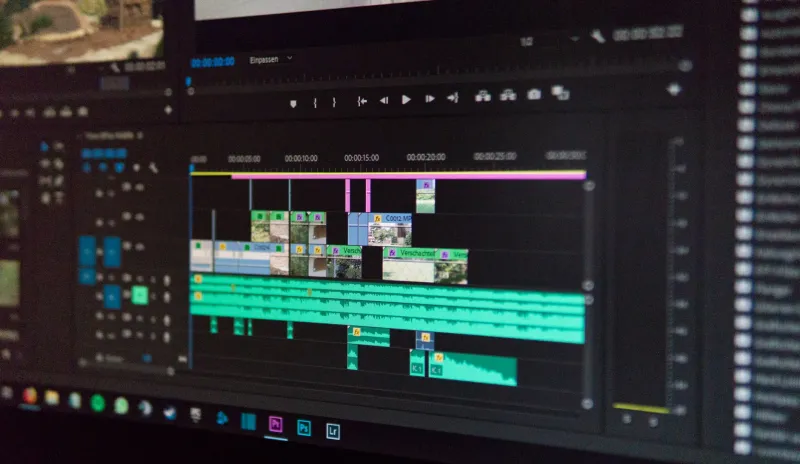
AI-assisted workflows change that relationship fundamentally. A generative system that can produce a photorealistic environment extension from a text prompt, or that can automatically match the grain and color temperature of a plate, compresses the distance between intention and output in ways that are genuinely powerful — and that simultaneously reduce the pressure on a practitioner to understand the underlying principles being applied.
Veteran artists working alongside junior colleagues trained in this environment describe the gap not as a skills deficit but as a vocabulary problem. When a senior compositor asks a younger artist why a particular element is not integrating correctly into a scene, the answer that comes back is sometimes technically accurate but conceptually thin — a description of what the tool did rather than an explanation of what the image is doing.
What Mentorship Looks Like When the Tools Are Different
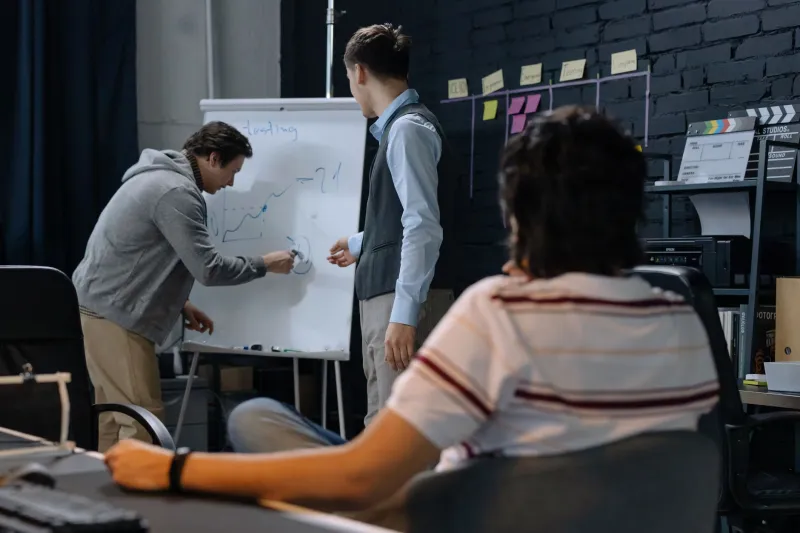
Traditional VFX mentorship operated on the assumption of a shared technical foundation. A senior artist could sit beside a junior artist, look at the same interface, and demonstrate a technique in terms that both understood. The knowledge being transferred was procedural but also conceptual — not just how to do something, but why that approach was correct given the physics of the problem.
That model is under significant strain in studios where senior and junior artists are working in fundamentally different software environments with fundamentally different underlying logics. Several studios have begun developing hybrid mentorship structures that attempt to address the gap — pairing AI-fluent junior artists with senior practitioners not to transfer specific technical skills but to build shared frameworks for evaluating output quality.
The questions these programs attempt to instill are not tool-specific. Does this image look like it was photographed, or does it look like it was generated? Does this motion feel like it was performed by a body with weight and history, or does it feel like a statistical approximation of motion? Can you articulate why this result is wrong in terms that would apply regardless of how it was produced?
For senior artists participating in these programs, the experience is frequently described as clarifying. Teaching forces articulation, and articulation reveals which elements of accumulated craft knowledge are genuinely principled and which are habits that formed around the limitations of older tools.
The Job Security Question Nobody Wants to Answer Directly
Underneath the professional discourse about workflow philosophy and mentorship strategy runs a current of economic anxiety that shapes every conversation about AI in VFX departments, whether or not it is explicitly acknowledged.
Veteran artists who have spent twenty or thirty years developing expertise in specific disciplines — matte painting, character rigging, particle simulation — are watching AI tools demonstrate competency in those same disciplines at a speed that has no historical precedent. The concern is not abstract. It is expressed in the mathematics of production budgets, in the conversations that happen when studios weigh the cost of an experienced specialist against the cost of an AI-assisted generalist.
Younger artists entering the industry carry their own version of this anxiety. The tools they were trained on are evolving faster than any training program can track, which means that the specific technical fluency they developed in school may have a shorter shelf life than they anticipated. Being AI-first is not a permanent competitive advantage in an environment where the AI itself is constantly changing.
What both generations share, experienced studio leaders argue, is a stake in the outcome of a conversation the industry has not yet had clearly or publicly: what is the irreducible creative contribution of a human artist in a production pipeline that increasingly includes AI as a collaborator?
Hybrid Approaches and the Question of Standards
The studios that appear to be navigating generational integration most successfully are those that have resisted framing the question as a competition between traditional craft and AI fluency. Instead, they have begun developing what might be called hybrid creative standards — explicit criteria for evaluating work quality that apply regardless of the tools used to produce it.
These standards tend to be rooted in the same principles that have governed high-quality VFX work for decades: physical plausibility, emotional authenticity, narrative integration. A digital environment that was generated in a fraction of the time it would have taken to build traditionally is evaluated by the same criteria as its predecessor — does it feel like a real place, does it serve the scene, does it survive scrutiny?
The discipline required to apply those standards consistently, regardless of how a piece of work was produced, is itself a form of craft knowledge — one that belongs to no single generation and that neither traditional nor AI-trained practitioners possess automatically.
Whether the industry develops the institutional structures to transmit that knowledge effectively, before the generational transition moves faster than mentorship can follow, may be the defining question for visual effects studios in the decade ahead.