When the Fall Never Happens: How Digital Effects Are Quietly Rewriting the Rules of On-Set Danger
There is a moment in virtually every major Hollywood production where someone in a production meeting asks the same uncomfortable question: do we actually need to put a person in that situation? For decades, the answer was almost always yes. A stunt performer would be rigged, rehearsed, and released into a sequence designed to look catastrophic while being, in theory, survivable. Today, that answer is changing — and the change is arriving not with fanfare, but with a render farm humming quietly in a server room somewhere in Burbank.
The integration of visual effects into sequences traditionally owned by stunt departments is not a new phenomenon. Wire removal, digital crowd augmentation, and background plate replacement have been standard practice for years. What is new is the scale and ambition of the substitution. Productions are now routinely commissioning VFX teams to fabricate entire high-risk sequences — car rollovers, building collapses, free-fall moments — that were once the exclusive domain of performers who trained for years to execute them safely.
The Pipeline That Changed Everything
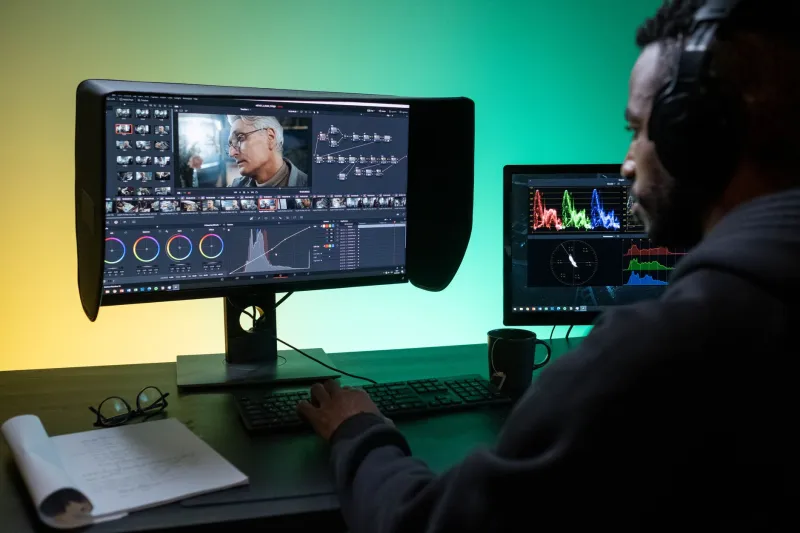
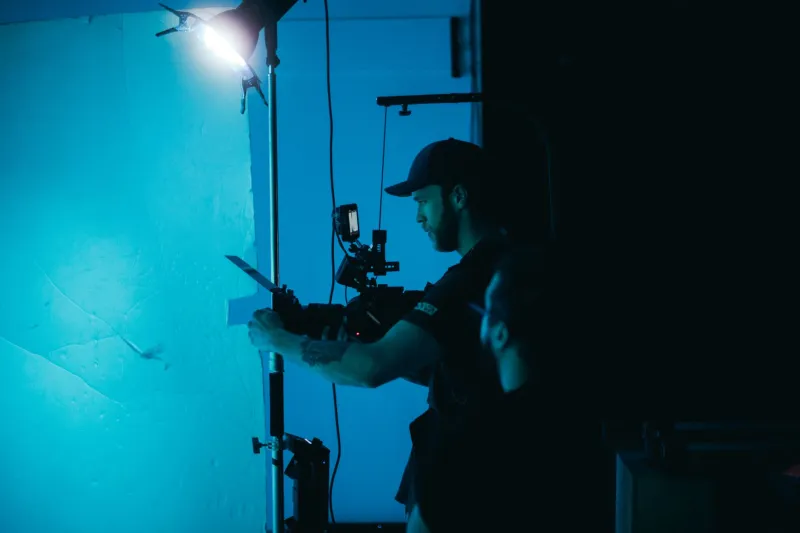
The emergence of virtual production technology, anchored by LED volume stages and real-time rendering engines, has fundamentally altered the calculus of physical risk on set. When a director can place a performer against a photorealistic background and simulate motion, physics, and environmental chaos through digital means, the argument for sending a human body into genuine danger becomes harder to make.
VFX supervisors working on major studio features describe a production landscape where stunt sequences are now frequently pre-visualized in such granular detail that the practical version becomes redundant before principal photography even begins. The digital assets — vehicle rigs, environmental destruction simulations, volumetric body captures — arrive so refined that the live execution would simply introduce unnecessary variables.
This is not framed internally as a replacement. It is framed as an enhancement, a safety measure, a creative optimization. But the practical outcome, as many in the stunt community will acknowledge privately and a growing number are beginning to say publicly, is a steady erosion of the work itself.
The Human Cost Behind the Clean Composite
For stunt coordinators who have spent careers building the physical grammar of cinematic action, the shift carries a weight that goes beyond professional displacement. The concern is partly economic — fewer practical sequences means fewer working days for stunt performers, many of whom operate as independent contractors without the safety net of studio employment. But the concern is also philosophical.
Stunt work, at its core, is a discipline built on the calibrated acceptance of real consequence. The authenticity that audiences respond to in great action sequences — the weight, the impact, the unmistakable sense that something is genuinely at stake — has historically emerged from that acceptance. When a performer takes a fall, the camera captures not just the movement but the physics of a human body responding to actual forces. Digital simulation, however sophisticated, is solving for the appearance of those forces rather than their presence.
VFX professionals are candid about this distinction, even as they defend the creative and safety logic of their tools. The best digital stunt work, they argue, is invisible precisely because it is built on a foundation of reference — motion capture data, photogrammetry scans, and extensive practical photography that inform every simulated frame. The digital performer is, in a meaningful sense, a composite of many real performers.
But that argument does not fully resolve the tension. A composite of references is not the same as a person making a choice in a moment of genuine physical commitment.
Case Studies in Controlled Fabrication
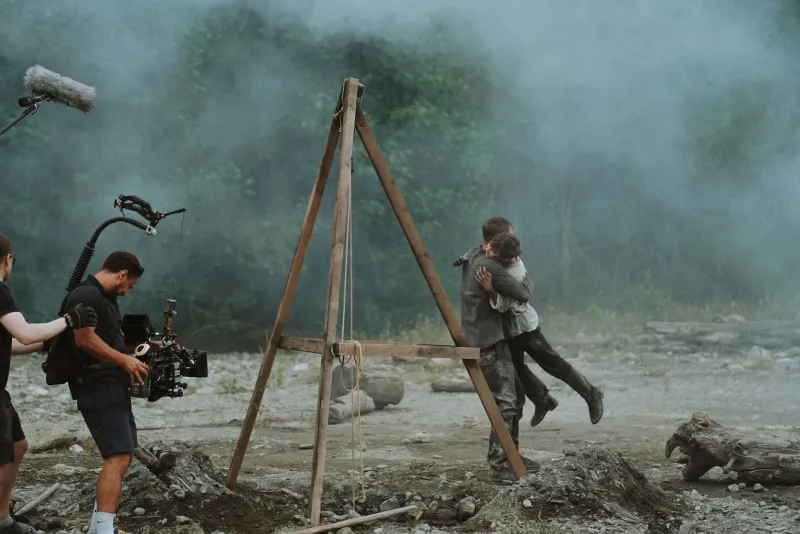
Without naming productions bound by non-disclosure agreements, VFX supervisors across the industry describe a recognizable pattern in how digitally fabricated stunt sequences come together. A practical element — often a simple, low-risk camera pass — is captured on set to establish lighting, lens characteristics, and environmental context. A stunt performer may execute a partial version of the sequence, providing motion reference that will be rebuilt digitally. The dangerous portion of the action is then constructed entirely in post-production, using simulation software, digital doubles, and compositing techniques refined over years of iterative development.
The results, in the hands of experienced VFX crews, are frequently indistinguishable from practical photography. That invisibility is, depending on one's perspective, either the technology's greatest achievement or its most troubling quality. Audiences cannot advocate for the craft they cannot see disappearing.
Some productions have taken a more transparent approach, publicly crediting the VFX work that replaced practical sequences and framing the decision explicitly around performer safety. This framing is not disingenuous — the elimination of preventable injury is a genuine and legitimate goal. But it also positions digital replacement as an unambiguous moral good, which forecloses more complicated conversations about what is being traded away.
Where the Line Should Be Drawn
The question of where practical ends and digital should begin does not have a clean answer, and the most thoughtful voices in both the stunt and VFX communities resist the urge to draw one arbitrarily. There is broad agreement that certain categories of risk — sequences involving extreme heights, vehicle collisions at speed, fire, or proximity to structural collapse — represent legitimate candidates for digital reconstruction. The safety argument there is compelling and largely uncontested.
The more contested territory involves sequences where the risk is moderate and the practical execution is feasible, but where digital replacement is chosen for reasons of schedule, budget, or simple convenience. This is where the stunt community's frustration is most acute, and where the creative tradeoffs are most visible to discerning eyes.
VFX supervisors are aware of this line and, in many cases, are actively engaged in conversations with stunt coordinators about where it should fall. The best working relationships between the two disciplines involve genuine collaboration — stunt teams informing digital work with practical expertise, VFX teams providing stunt coordinators with tools that expand rather than eliminate their creative options.
The Future of Physical Craft in American Cinema
American cinema has always been defined, in part, by a particular appetite for physical spectacle — a tradition that runs from the silent era through the golden age of stunt work in the 1970s and into the contemporary action blockbuster. That tradition is not disappearing. But it is being renegotiated, sequence by sequence, in production meetings and VFX reviews across the industry.
The studios best positioned to navigate this renegotiation are those that treat stunt expertise and digital craft not as competing resources but as complementary vocabularies. The most memorable action sequences in recent American cinema — the ones that genuinely register in the body of the viewer — tend to be those where practical and digital elements are woven together with intentionality, where the digital work is amplifying a real physical event rather than fabricating one wholesale.
For the VFX community, the responsibility is significant. The tools are extraordinary. The creative possibilities are genuinely unprecedented. But the best use of those tools is not the elimination of physical craft — it is the elevation of it. The stunt that never happens should be the one that would have caused genuine, unacceptable harm. Every other stunt deserves a performer willing to take the fall, and an audience that knows the difference.