Code, Craft, and Conflict: How Artificial Intelligence Is Reshaping the Soul of Visual Effects
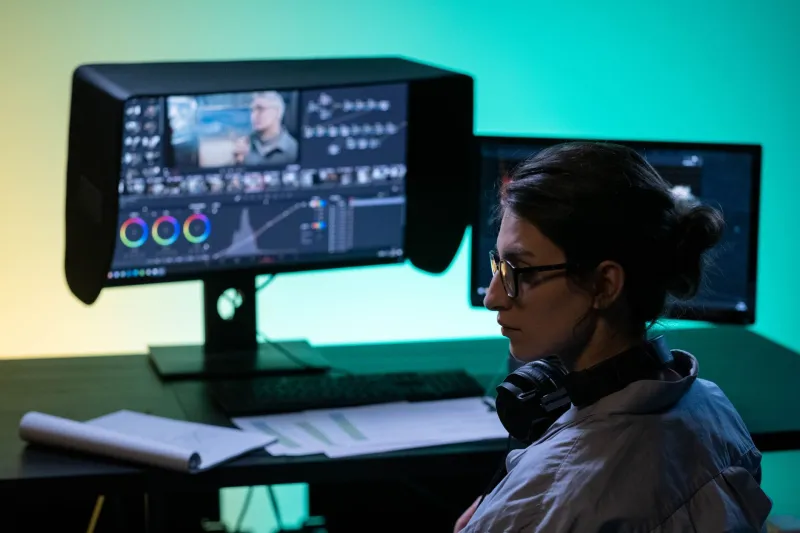
Somewhere inside a major Los Angeles post-production facility, a machine is watching a movie. It is not watching it the way a cinematographer might — searching for light, texture, and emotion — but it is watching nonetheless, parsing every frame at a speed no human compositor could match, isolating a performer's hair strand by strand, separating foreground from background with a precision that would have required days of painstaking manual work just five years ago. The machine does not take lunch breaks. It does not negotiate overtime. And it is getting better at an unsettling pace.
This is the new reality of artificial intelligence in visual effects: quiet, pervasive, and deeply contested.
From Rotoscope Rooms to Neural Networks
For decades, rotoscoping — the meticulous process of tracing the outline of subjects frame by frame to isolate them from their backgrounds — was considered one of the most labor-intensive disciplines in post-production. Junior artists often spent months on single sequences, developing a practiced eye and a tolerance for repetition that bordered on meditative. The craft had its own culture, its own hierarchy, its own institutional knowledge.
Then came machine learning-assisted rotoscoping tools. Platforms such as Runway ML and proprietary systems developed internally by major studios began demonstrating that neural networks, trained on vast libraries of footage, could perform rough rotoscoping passes in a fraction of the time. On productions where turnaround windows are measured in weeks rather than months, the appeal was immediate and difficult to ignore.
Producers and VFX supervisors who have adopted these tools are candid about the efficiency gains. Tasks that once required a team of six artists working across multiple shifts can now be initiated by two, with the machine handling the foundational pass and human artists refining the result. The math, from a purely budgetary standpoint, is compelling.
Generative Environments and the Expanding Frontier
Rotoscoping is only one corner of the battlefield. Generative AI tools are now being deployed to construct background environments, extend practical sets, and populate crowd scenes with synthetic figures that respond to lighting conditions in increasingly convincing ways. Productions operating under compressed schedules have used these systems to generate establishing shots that might otherwise have required location scouts, travel budgets, and weeks of plate photography.
The technology has also made inroads into texture generation, matte painting augmentation, and — most controversially — the creation of entirely synthetic visual elements that exist nowhere in the physical world. Some studios are quietly experimenting with AI-assisted concept visualization, allowing directors to explore compositional ideas in near-real time without commissioning traditional previs artwork.
For technologists championing these systems, the argument is straightforward: every major advancement in VFX history, from digital compositing to performance capture, initially provoked resistance before being absorbed into the creative mainstream. AI, they contend, is simply the next evolution — one that frees human artists from mechanical repetition and redirects their energy toward higher-order creative decisions.
The Human Cost of Efficiency
Not everyone finds that argument persuasive, and the dissent comes from credible quarters.
Veteran artists and union representatives affiliated with the International Alliance of Theatrical Stage Employees (IATSE) have raised pointed concerns about what accelerated automation means for entry-level positions that have historically served as the training ground for the next generation of senior talent. If a neural network absorbs the rotoscoping workload, where do tomorrow's compositors learn the foundational discipline that eventually makes them indispensable?
The concern is not merely theoretical. Several mid-sized VFX facilities have acknowledged reducing their junior artist headcount following the adoption of AI-assisted tools, framing the reductions as natural workforce evolution rather than displacement. To those who lost positions, the distinction feels academic.
There is also a deeper creative anxiety running beneath the economic argument. Many experienced artists describe their work not as a series of discrete technical tasks but as an integrated act of visual problem-solving, one in which the seemingly mechanical steps — the careful tracing of a hairline, the gradual refinement of an edge — are inseparable from the perceptual understanding that makes the final image convincing. Automating those steps, some argue, does not merely speed up the process; it severs a crucial feedback loop between the artist's eye and the work.
Ethical Terrain and Unresolved Questions
Beyond labor economics, the integration of generative AI into professional VFX pipelines raises ethical questions that the industry has been slow to formally address. Generative models are trained on existing imagery, and the provenance of that training data — whether it includes the work of artists who were never consulted and never compensated — remains a point of genuine legal and moral uncertainty. Several class-action lawsuits filed against AI image generation companies have brought this issue into sharper relief, and their outcomes are being watched closely by studios and unions alike.
The question of creative attribution is equally unresolved. When a generative system produces a background environment that appears in a finished film, who receives credit? The artist who prompted the system? The engineer who built the model? The thousands of unnamed creators whose work trained it? Current industry crediting conventions offer no clear answer.
Some studios have begun drafting internal AI usage policies, attempting to define boundaries around where automated tools may and may not be deployed without additional human oversight. These policies vary considerably from company to company, reflecting an industry that is improvising its ethical framework in real time.
A Tool, a Collaborator, or a Replacement?
The most nuanced voices in this conversation resist the binary framing that dominates public debate. Neither the utopian vision of AI as a purely liberating creative partner nor the dystopian scenario of wholesale artist displacement fully captures the complicated reality currently unfolding inside production pipelines.
What does appear certain is that the artists and supervisors who will navigate this transition most successfully are those who approach AI tools with both fluency and critical discernment — who understand what a machine can and cannot perceive, and who remain anchored in the foundational visual intelligence that no algorithm has yet convincingly replicated. The capacity to recognize when a generated image is subtly wrong, when a synthetic environment lacks the accidental authenticity of the physical world, when a composited element fails to breathe within its surroundings — these remain distinctly human capabilities, and they are not trivial ones.
The machines are watching the movies. But for now, at least, they are not yet watching them the right way.
The conversation about what artificial intelligence means for the future of visual effects is no longer a speculative exercise. It is happening on production floors, in union negotiations, in legal filings, and in the quieter moments when a senior artist looks at a machine-generated frame and wonders, with genuine uncertainty, what their role in the process is becoming. That question deserves a serious answer — and the industry, to its credit and its discomfort, is beginning to reckon with it.