The End of the Waiting Game: Real-Time Rendering and the Quiet Collapse of Hollywood's Computational Backbone

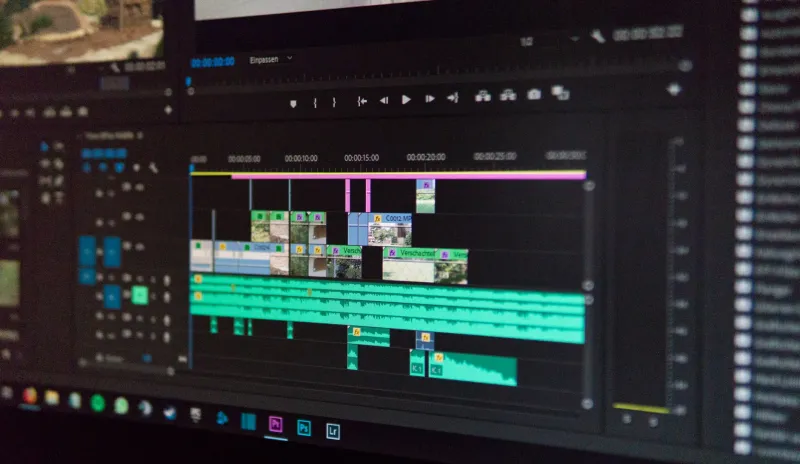
Photo by Photo by Yoan on Unsplash on Unsplash
There is a particular kind of anxiety that VFX artists know well. It is the anxiety of submitting a render job at the end of a Friday afternoon, watching the progress bar crawl across the screen, and understanding with absolute certainty that the result will not arrive until sometime Monday morning — possibly later, depending on how many other departments are competing for the same computational resources. That anxiety, endemic to professional visual effects production for more than three decades, is now becoming obsolete. And the transition is proving far more complicated than anyone anticipated.
Real-time rendering engines — most prominently Epic Games' Unreal Engine, but also Unity and a growing roster of competitors — have introduced something that traditional render farm infrastructure was architecturally incapable of offering: immediacy. The ability to see a fully lit, fully shaded, fully composited frame the moment an artist makes a creative decision is not merely a technical convenience. It is a fundamental reorganization of how visual storytelling gets made.
The Infrastructure That Built an Industry
To understand the scale of this disruption, it helps to appreciate what render farms actually represented. At their peak, the largest facilities operated thousands of networked computing nodes running in parallel, consuming enormous amounts of electricity and requiring dedicated engineering teams simply to keep them operational. Studios like Industrial Light & Magic, Weta FX, and DNEG invested hundreds of millions of dollars in this infrastructure over the course of their histories. The render farm was not just a technical asset — it was a symbol of institutional scale, a marker of which studios could compete at the highest level of the industry.
The computational logic underlying traditional rendering — ray tracing, global illumination, subsurface scattering — demanded this kind of horsepower because photorealistic imagery requires simulating the behavior of light with extraordinary precision. Every photon, every shadow, every reflective surface had to be calculated mathematically, and those calculations were expensive enough that even the most powerful hardware needed hours to process a single frame.
Render farms solved that problem through parallelism. Rather than processing one frame at a time on one machine, a studio could distribute thousands of frames across thousands of machines simultaneously. The math still took time, but the assembly line compressed that time into something commercially viable.
When Instant Became Possible
Real-time engines approached the same problem from an entirely different direction. Rather than calculating light with physical accuracy after the fact, they use a combination of pre-baked lighting data, sophisticated approximations, and increasingly powerful GPU hardware to generate convincing imagery at interactive frame rates. Early real-time graphics were immediately identifiable as such — the aesthetic compromises required to maintain speed were simply too visible. That distinction has been eroding rapidly.
The introduction of hardware-accelerated ray tracing in modern GPU architectures, combined with machine-learning-driven denoising algorithms, has brought real-time rendering quality close enough to offline rendering quality that the gap is now a matter of calibrated creative judgment rather than obvious technical limitation. For many applications — previs, virtual production, episodic television, and an expanding range of theatrical projects — that gap has effectively closed.
The implications for pipeline architecture are profound. When artists no longer need to submit render jobs and wait, the entire rhythm of production changes. Iteration cycles that once took days can now be compressed into hours. Directors who previously had to trust storyboards and animatics to evaluate complex sequences can now walk through photorealistic environments in real time during pre-production. The creative conversation between department leads becomes continuous rather than episodic.
The Cost Calculus Is Not Simple
On paper, the economics appear straightforward. Eliminating or drastically reducing render farm infrastructure should generate significant savings — lower electricity costs, reduced hardware maintenance, smaller engineering headcounts dedicated purely to computational operations. For studios operating on thin margins in an increasingly competitive global market, those savings are genuinely attractive.
The reality, however, is considerably more complicated. Transitioning a studio from a traditional pipeline to a real-time workflow requires substantial re-training investment. Artists who have spent careers mastering tools like Houdini, Arnold, or RenderMan must develop proficiency in entirely different environments. Pipeline technical directors must rebuild asset management systems, file structures, and quality control checkpoints from the ground up. The institutional knowledge embedded in a mature traditional pipeline — accumulated over years of problem-solving and refinement — does not transfer automatically.
There is also the question of hardware. Real-time rendering is GPU-intensive in ways that traditional render farms were not, and high-end GPU hardware carries significant upfront costs. Studios evaluating the transition must weigh those capital expenditures against the ongoing operational costs of maintaining legacy infrastructure, a calculation that varies enormously depending on facility size, project slate, and existing equipment age.
What Survives the Transition
Not every element of the traditional pipeline is facing extinction. Certain categories of work — complex fluid simulations, large-scale destruction effects, photorealistic character rendering for theatrical close-ups — still benefit from the computational thoroughness that offline rendering provides. The prevailing consensus among VFX supervisors is not that render farms will disappear entirely, but that they will become specialized tools reserved for specific high-demand scenarios rather than the default infrastructure for all rendering work.
Hybrid pipelines are already emerging at several major facilities. Work that benefits from real-time feedback — environment design, lighting layout, camera work, previs — moves through Unreal Engine or equivalent platforms. Final-frame rendering for sequences requiring maximum fidelity continues to route through traditional farm infrastructure, though on a dramatically reduced scale.
The supervisors navigating this transition describe it less as a revolution than as a careful reorganization — one that requires constant evaluation of where each tool in the toolkit genuinely serves the project, and where institutional habit is simply slowing creative momentum.
The Broader Significance
What is happening to the render farm is, in microcosm, what is happening to the entire VFX industry: tools that were once prohibitively expensive and technically demanding are becoming accessible, fast, and increasingly capable of meeting professional standards. That democratization changes the competitive landscape, shifts power between large and small studios, and forces every facility to continuously interrogate whether its existing infrastructure is an asset or a liability.
For the artists and supervisors at the center of this transition, the experience is simultaneously exciting and disorienting. The waiting game that defined careers is ending. What replaces it is still being written, one real-time frame at a time.