Divided by Distance: How the Globalization of VFX Labor Is Testing the Limits of Creative Coherence
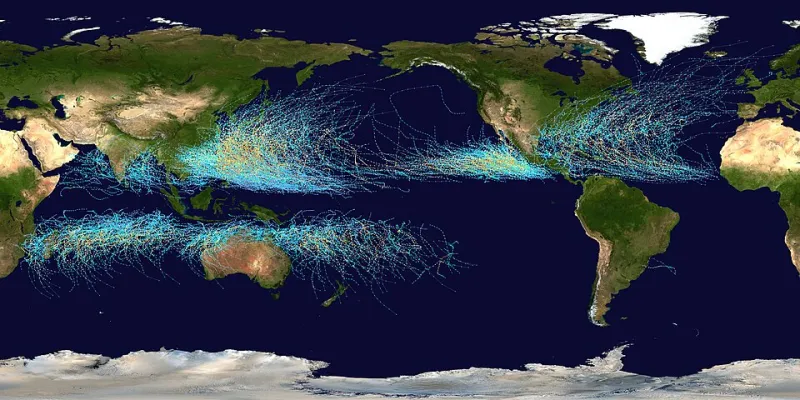
Photo: Background image: NASA this version: Nilfanion, Public domain, via Wikimedia Commons
On any given production day for a major American studio film, the following scenario is entirely routine: a modeling team in Mumbai completes a digital asset and uploads it to a shared server. A rigging team in Montreal receives that asset, applies skeletal structure, and passes it to an animation department in London. That animated asset travels to a lighting and compositing team in Vancouver, which integrates it into a final frame that a VFX supervisor in Los Angeles reviews the following morning before the cycle begins again.
This chain of handoffs, spanning four cities across three continents and at least three distinct time zones, represents the operational reality of contemporary visual effects production. It is also, for anyone who has worked within it, a source of creative friction that the industry's accounting departments have never found a satisfying way to quantify.
The Economic Logic That Built a Global Industry
The geographic dispersal of VFX labor did not happen by accident. It was the predictable consequence of a straightforward economic calculation: skilled visual effects artists in certain markets — India, Southeast Asia, Eastern Europe — can be compensated at rates substantially lower than their counterparts in Los Angeles, Vancouver, or London, while producing work of comparable technical quality across a growing range of disciplines.
For studios operating under the financial pressure of blockbuster budgets that now routinely exceed two hundred million dollars, those differentials are impossible to ignore. A production that can complete its modeling and rigging work at sixty percent of the cost of doing the same work domestically is a production that has more resources available for the elements — director's fees, cast salaries, marketing — that studios consider strategically essential.
Government incentive programs have added another layer of complexity to this geography. Canada's provincial tax credit systems, the United Kingdom's film tax relief, Australia's location offset, and comparable programs in New Zealand, Hungary, and elsewhere have made certain cities magnets for VFX work regardless of whether that geographic concentration makes creative sense. Studios frequently find themselves distributing work not according to which facility is best positioned to execute a particular sequence, but according to which combination of facilities generates the most favorable tax credit outcome.
The Handoff Problem
Every transfer of work between facilities represents an opportunity for information to degrade. This is not a failure of individual competence — it is a structural consequence of the communication constraints that geographic separation imposes. When a modeling team in one city builds a digital asset based on their interpretation of a brief, and that asset travels to an animation team in another city that interprets the same brief differently, the resulting character may satisfy both teams' local creative standards while failing to serve the production's unified visual intent.
The problem compounds across the chain. By the time a compositing team is integrating assets that have passed through three or four different facilities, the accumulated interpretive drift can be significant. Compositors — already operating under considerable time pressure as the final creative gatekeepers before delivery — frequently find themselves making aesthetic decisions that should have been resolved at the modeling or animation stage, working with materials whose underlying assumptions they cannot fully reconstruct.
VFX supervisors who manage globally distributed productions describe a particular kind of exhaustion that comes with this territory. It is not the exhaustion of solving difficult creative problems. It is the exhaustion of solving the same communication problems repeatedly, watching misunderstandings that were resolved in one handoff reemerge in slightly different form in the next.
Time Zone Arithmetic and Its Creative Consequences
The time zone mathematics of a globally distributed VFX production are, on close examination, genuinely punishing. A supervisor in Los Angeles who needs to course-correct work being done in Mumbai has a communication window of roughly two to three hours before the business day in India ends. If the correction requires clarification, or if the initial response reveals a misunderstanding that requires further discussion, that window may close before resolution is reached — pushing the correction to the following day and introducing a twenty-four-hour delay into a schedule that has no slack.
Multiply that dynamic across dozens of active sequences and multiple vendor facilities, and the accumulated delay becomes a structural feature of the production rather than an occasional inconvenience. Schedules that would be achievable with a co-located team become aspirational with a globally distributed one, even when the distributed team contains more total hours of working time.
The creative consequences extend beyond scheduling. Decisions that benefit from rapid iterative discussion — the kind of back-and-forth between a supervisor and an artist that refines a creative direction in real time — become difficult or impossible when the participants are separated by twelve hours. Those decisions get made asynchronously, through written briefs and recorded video notes, in a medium that strips away the nuance and responsiveness that make creative collaboration effective.
What Gets Lost in Translation
The most significant creative cost of geographic fragmentation may be the hardest to measure: the erosion of shared aesthetic intuition. When a team of artists works together in the same physical space over the course of a production, they develop a collective understanding of what the project is trying to achieve — an internalized sense of its visual language, its tonal register, its specific approach to light and texture and movement. That shared intuition allows individual artists to make thousands of small creative decisions correctly without explicit instruction, because they have absorbed enough context to extrapolate the right answer.
A globally distributed team cannot develop that intuition in the same way. Each facility sees only its portion of the production, and the context that would allow its artists to make autonomous creative decisions wisely is perpetually incomplete. The result is a production that requires more explicit instruction at every level, more supervisory oversight, and more corrective iteration — all of which consume time and resources that the cost savings were supposed to generate.
Navigating the Contradiction
The studios and facilities that have managed globally distributed productions most successfully have generally done so by investing heavily in the infrastructure of communication — not just the technical infrastructure of shared servers and video conferencing, but the human infrastructure of experienced coordinators, detailed briefs, and supervisory personnel who travel between facilities to maintain creative continuity in person.
Those investments are real costs, rarely captured in the accounting models that make distributed production appear straightforwardly economical. When they are included, the calculus becomes considerably more complicated — and the question of whether the geographic fragmentation of VFX labor genuinely serves the productions it is meant to benefit becomes considerably harder to answer with confidence.